 Talmud Bavli
Pesahim 37b : Youtube
Daf TubeYoutube
3 video classes :
Pesahim Page 37b
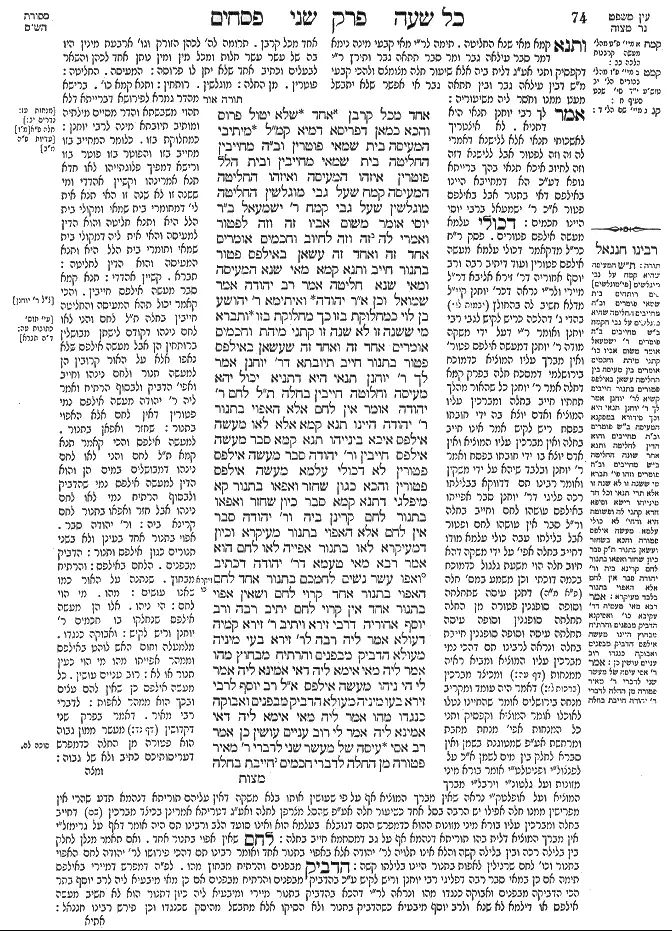
Pesahim 37b - Guemara
אחד מכל קרבן אחד שלא יטול פרוס והכא כמאן דפריסא דמיא קמ"ל מיתיבי המעיסה בית שמאי פוטרין וב"ה מחייבין החליטה בית שמאי מחייבין ובית הלל פוטרין איזהו המעיסה ואיזהו החליטה המעיסה קמח שעל גבי מוגלשין החליטה מוגלשין שעל גבי קמח ר' ישמעאל ב"ר יוסי אומר משום אביו זה וזה לפטור ואמרי לה זה וזה לחיוב וחכמים אומרים אחד זה ואחד זה עשאן באילפס פטור בתנור חייב ותנא קמא מאי שנא המעיסה ומאי שנא חליטה אמר רב יהודה אמר שמואל וכן א"ר יהודה ואיתימא ר' יהושע בן לוי כמחלוקת בזו כך מחלוקת בזו ותברא מי ששנה זו לא שנה זו קתני מיהת וחכמים אומרים אחד זה ואחד זה שעשאן באילפס פטור בתנור חייב תיובתא דר' יוחנן אמר לך ר' יוחנן תנאי היא דתניא יכול יהא מעיסה וחלוטה חייבין בחלה ת"ל לחם ר' יהודה אומר אין לחם אלא האפוי בתנור ר' יהודה היינו תנא קמא אלא לאו מעשה אילפס איכא בינייהו תנא קמא סבר מעשה אילפס חייבין ור' יהודה סבר מעשה אילפס פטורין לא דכולי עלמא מעשה אילפס פטורין והכא כגון שחזר ואפאו בתנור קא מיפלגי דתנא קמא סבר כיון שחזר ואפאו בתנור לחם קרינן ביה ור' יהודה סבר אין לחם אלא האפוי בתנור מעיקרא וכיון דמעיקרא לאו בתנור אפייה לאו לחם הוא אמר רבא מאי טעמא דר' יהודה דכתיב (ויקרא כו, כו) ואפו עשר נשים לחמכם בתנור אחד לחם האפוי בתנור אחד קרוי לחם ושאין אפוי בתנור אחד אין קרוי לחם יתיב רבה ורב יוסף אחוריה דרבי זירא ויתיב ר' זירא קמיה דעולא אמר ליה רבה לר' זירא בעי מיניה מעולא הדביק מבפנים והרתיח מבחוץ מהו אמר ליה מאי אימא ליה דאי אמינא ליה אמר לי הי ניהו מעשה אילפס א"ל רב יוסף לרבי זירא בעו מיניה מעולא הדביק מבפנים ואבוקה כנגדו מהו אמר ליה מאי אימא ליה דאי אמינא ליה אמר לי רוב עניים עושין כן אמר רב אסי עיסה של מעשר שני לדברי ר' מאיר פטורה מן החלה לדברי חכמים חייבת בחלה
Comments from Rashi on Masechet Pesahim Page 37b
אחד מכל קרבן . תרומה לה' לכהן הזורק וגו' ארבעת מינין היו בה של עשר עשר חלות ומכל מין ומין נותן אחד לכהן והשאר לבעלים וכתיב אחד שלא יתן לו פרוסה: המעיסה . החליטה: פוטרין . מן החלה: מוגלשין . רותחין: ותנא קמא כו' . ברישא מהדר גמרא לפירושא דברייתא דלא תהוי משבשתא והדר מסיים מילתיה ומותיב תיובתא מינה לרבי יוחנן: כמחלוקת בזו . כלומר המחייב בזו מחייב בזו והפוטר בזו פוטר בזו ורישא דמפיך פלוגתייהו לאו חדא תנא אמרינהו וקשיין אהדדי ומי ששנה זו לא שנה זו האי תנא אית לי' דמחומרי בית שמאי ומקולי בית הלל היא ותנא חליטה והוא הדין למעיסה והאי אית ליה דמקולי בית שמאי וחומרי בית הלל היא ותנא המעיסה והוא הדין לחליטה: תברא . קשיין אהדדי: תנא קמא סבר מעשה אילפס חייבין . והכי קאמר יכול תהא המעיסה והחליטה חייבין בחלה ת"ל לחם והני לאו לחם נינהו דקודם לישתן מבושלין ברותחין הן אבל מעשה אילפס שלא נאפו אלא על האור קרובין הן למעשה תנור ולחם נינהו וחייב ואפי' הדביק ולבסוף הרתיח ואמר ליה ר' יהודה מעשה אילפס נמי פטורין דאין לחם אלא האפוי בתנור: שחזר ואפאן בתנור . למעשה אילפס והכי קאמר תנא קמא ת"ל לחם והני לאו לחם נינהו דמבושלים במים הן והוא הדין למעשה אילפס נמי שהדביק ולבסוף הרתיח נמי לאו לחם נינהו אבל חזר ואפאו בתנור לחם קרינא ביה: ור' יהודה סבר . אפוי בתנור אחד בעינן ולא בשני תנורים כגון אילפס ותנור: הדביק מבפנים . הלחם באילפס: והרתיח מבחוץ . שנתנה על האור כמו שאנו עושים: מהו . מי הוי לחם: הי ניהו . אלו הן מעשה אילפס שנחלקו בו חכמים ר' יוחנן וריש לקיש: ואבוקה כנגדו . מלמעלה וחום האש לוהט באילפס וממהר אפייתו מהו מי הוי כעין תנור או לא: רוב עניים עושין . כל מעשה אילפס כן שאין להם עצים ובכך הוא ממהר לאפות: לדברי רבי מאיר . דאמר בפרק שני דקדושין (דף נד:) מעשר ממון גבוה הוא פטורה מן החלה כדמפרש דעריסותיכם כתיב ולא של גבוה:
Comments from Tosafot - Pesahim 37b
ותנא קמא מאי שנא החליטה . תימה לר"י מאי קבעי מינה נימא דמר סבר עילאה גבר ומר סבר תתאה גבר ותירץ ר"י דקפסיק ותני אע"ג דלית ביה אלא שיעור חלה מצומצם ולהכי קבעי מ"ש דבין עילאה גבר ובין תתאה גבר אי אפשר שלא יתבשל מעט ממנו וחסר ליה משיעוריה: אמר לך רבי יוחנן תנאי היא דתניא . לא איצטריך לאשכוחי תנאי אלא ללישנא דאמרי לה זה וזה לפטור אבל ללישנא דזה וזה לחיוב איכא תנאי בהך ברייתא גופא דע"כ הא דמחייבא היינו באילפס דאי בתנור אבל באילפס פטור א"כ ר' ישמעאל ברבי יוסי היינו חכמים: דכולי עלמא מעשה אילפס פטורים . פסק ר"ח כר"ל מדקאמר דכולי עלמא מעשה אילפס פטורין ועוד דיתיב רבה ורב יוסף אחוריה דר' זירא אליבא דר"ל מיירי ולר"י נראה דכר' יוחנן קיי"ל מדלא חשיב לה בהחולץ (יבמות לו.) בהדי ג' דהלכה כריש לקיש לגבי רבי יוחנן ואומר ר"י דעל ידי משקה מודה ר' יוחנן דמעשה אילפס פטור' ואין מברך עליו המוציא כדמוכח בירושלמי דמסכת חלה בפרק קמא דחלה אמר ר' יוחנן כל שהאור מהלך תחתיו חייב בחלה ומברכין עליו המוציא ואדם יוצא בה ידי חובתו בפסח ריש לקיש אמר אינו חייב בחלה ואין מברכין עליו המוציא ואין אדם יוצא בו ידי חובתו בפסח ואמר ר' יוחנן ובלבד שיהא על ידי משקין ואומר רבינו תם דדווקא בבלילתו רכה פליגי דר' יוחנן סבר אפייתו באילפס עושהו לחם וחייב בחלה ור"ל סבר אין עושהו לחם ופטור אבל בלילתו עבה כולי עלמא מודו דחייב בחלה אפי' על ידי משקה דהא חיוב חלה הוי משעת גלגול כדמוכח בכמה דוכתי וכן משמע במס' חלה (פ"א מ"ה) דתנן עיסה שתחלתה וסופה סופגנין פטורה מן החלה תחלתה סופגנין וסופה עיסה תחלתה עיסה וסופה סופגנין חייבת בחלה ונראה לרבינו תם דהכי נמי מברכין עליו המוציא ומביא ראיה ממנחות (דף עה:) ומכיצד מברכין (ברכות לז:) דאמר היה עומד ומקריב מנחה בירושלים אומר שהחיינו נטלו לאוכלו אומר המוציא וקפסיק ותני כל המנחות אפי' מנחת מחבת ומרחשת אע"פ שמטוגנת בשמן ואין סברא לחלק בין מים לשמן א"כ על לפנצול"י ופניטלט"י אומר בורא מיני מזונות ועל גלטונ"י וירבל"י מברך המוציא ועל אופלטק"י נראה שאין מברך המוציא אף על פי שעושין אותו בלא משקה דאין עליהם תוריתא דנהמא תדע שהרי אין מפרישין ממנו חלה אפילו יש הרבה בסל אחד כשיעור חלה אע"פ שהסל מצרפן לחלה ואע"ג דטריתא אמרינן בכיצד מברכין (שם) דחייב בחלה ומברכין עליו בורא מיני מזונות ההוא כדמפרש התם דגובלא בעלמא הוא ואינו סועד הלב ורבינו תם היה אומר דאף על גרימזל"י אין מברך המוציא דלית בהו תוריתא דנהמא אף על גב דמסתמא חייב בחלה: לחם שאין אפוי בתנור אחד . ואם תאמר מנלן לחלק בין בלילה רכה ובין בלילה קשה והלא אינו תלויה לר' יהודה אלא באפוי בתנור אחד ואומר רבינו תם דהכי פירושו לר' יהודה לחם האפוי בתנור וכו' לחם שרגילין לאפות בתנור היינו בלילתו קשה: הדביק מבפנים והרתיח מבחוץ מהו . לפ"ה דמפרש דמיירי באילפס תימה אם כן במאי סבר רבה דפליגי רבי יוחנן וריש לקיש ע"כ בהדביק מבפנים והרתיח מבפנים אם כן מאי מיבעיא ליה לרב יוסף בתר הכי הדביקה מבפנים ואבוקה כנגדו מהו ונראה לר"י דהכא בהדביק בתנור מיירי ומיבעיא ליה כיון דתנור הוא לא חשיב מעשה אילפס או דילמא לא שנא ולרב יוסף מיבעיא כשהדביק בתנור ולא הסיקו אלא מתבשל מהיסק שכנגדו וכן פירש רבינו חננאל:
Pesahim 37b - Mishnah translated into english
one out of each offering for a gift to the Lord; it shall belong to the priest who sprinkles the blood of the peace-offerings” (Leviticus 7:14), and the word “one” indicates that it must be a whole loaf, i.e., that one should not take a broken piece, and here the bread has not been properly baked, it might therefore have been thought that it is considered as though it were broken. Consequently, the baraita teaches us that this is nevertheless classified as bread.
The Gemara raises an objection: With regard to me’isa, dough that was boiled in water, Beit Shammai exempt one from separating ḥalla, and Beit Hillel obligate one to do so. As for dough that has undergone the process of ḥalita, Beit Shammai obligate one to separate ḥalla from it, and Beit Hillel exempt. The Gemara asks: What is me’isa and what is ḥalita? The Gemara explains: Me’isa is dough prepared by pouring flour on boiling water [muglashin], whereas ḥalita is formed by pouring boiling water on flour.
Rabbi Yishmael, son of Rabbi Yosei, said in the name of his father: From both this, me’isa, and that, ḥalita, one is exempt from separating ḥalla. And some say that he said: With regard to both this and that, one is obligated to separate ḥalla. And the Rabbis say: With regard to both this and that, if one prepared them in a pot, he is exempt from the mitzva of ḥalla; however, if he prepared the bread in an oven, he is obligated to separate ḥalla.
The Gemara asks: And according to the first tanna, who taught that Beit Shammai and Beit Hillel disagree with regard to these two cases, what is different about me’isa and what is different about ḥalita? Why do Beit Shammai and Beit Hillel reverse their opinions with regard to these types of bread? Rav Yehuda said that Shmuel said, and likewise Rabbi Yehuda said, and some say it was Rabbi Yehoshua ben Levi who said: As is the dispute with regard to this type of bread, so is the dispute with regard to that one; i.e., Beit Hillel are either lenient or stringent in both cases. And the variation in the baraita is due to a break in its text, which is actually a combination of two sources, because he who taught this baraita did not teach that one, as the two statements were taught by different Sages.
The Gemara now states the objection: In any event, the baraita is teaching that the Rabbis say: With regard to both this and that, me’isa and ḥalita, if one prepared them in a pot he is exempt from the mitzva of ḥalla, but if he prepared them in an oven he is obligated to separate ḥalla. This is apparently a conclusive refutation of Rabbi Yoḥanan, who claims that one is obligated to separate ḥalla from bread cooked in a pot. The Gemara answers: Rabbi Yoḥanan could have said to you: It is a dispute between tanna’im, as it was taught in a baraita: I might have thought that one is obligated to separate ḥalla from me’isa and ḥaluta; therefore, the verse states “bread” to inform us that this is not the case.
Rabbi Yehuda says: Bread is nothing other than that which is baked in an oven. The Gemara asks: The opinion of Rabbi Yehuda is the same as that of the first tanna. Rather, is it not the case that the practical difference between them is in the case of bread prepared as pot-boiled stew? The first tanna maintains that one is obligated to separate ḥalla from bread prepared as pot-boiled stew, unlike bread prepared by me’isa and ḥalita. And Rabbi Yehuda maintains: Similar to me’isa and ḥalita, one is exempt from separating ḥalla from bread prepared as pot-boiled stew, as it was not baked in an oven.
The Gemara rejects this suggestion: No, it is possible to say that everyone agrees that the owner of bread prepared as pot-boiled stew is exempt from ḥalla, and here they disagree with regard to a case where one subsequently baked it in the oven. The first tanna maintains that since one subsequently baked it in the oven, it is called bread, and one must separate ḥalla from it. And Rabbi Yehuda maintains that bread is nothing other than that which is initially baked in an oven, and since this food was not initially baked in an oven, it is not classified as bread.
Rava said: What is the reason of Rabbi Yehuda? As it is written: “And ten women shall bake your bread in one oven” (Leviticus 26:26). Rava learns from this verse that bread baked in one oven is called bread, and that which is not baked in one oven, but rather in several different vessels, is not called bread.
Rabba and Rav Yosef sat behind Rabbi Zeira and Rabbi Zeira sat before Ulla to hear him teach Torah. Rabba said to Rabbi Zeira: Raise the following dilemma of Ulla: If one pasted bread inside a pot and heated it from the outside, what is the halakha? Is one obligated to separate ḥalla from this bread? He said to him: Why should I say this question to Ulla? For if I say this to him, he will say to me: What is the halakha with regard to bread prepared as pot-boiled stew? In other words, he will reply that my question is effectively the same as that well-known case.
Rav Yosef further said to Rabbi Zeira: Raise the following dilemma of Ulla: If one pasted bread inside a pot and lit a torch opposite it, what is the halakha? He again said to him: Why should I say this question to Ulla? As if I say this to him, he will say to me: The majority of poor people do this when they use a pot for cooking, and therefore this too should be considered the same as bread prepared like pot-boiled stew.
Rav Asi said: With regard to dough of second-tithe produce, in accordance with the statement of Rabbi Meir, one is exempt from separating ḥalla from it. The reason is that Rabbi Meir considers second tithe to be consecrated property, which means that although its owner is entitled to use this produce, it does not in fact belong to him. By contrast, in accordance with the statement of the Rabbis, who maintain that second-tithe produce is the property of its owner, one is obligated to separate ḥalla from it.
Traduction : The William Davidson digital edition of the Koren Noé Talmud, with commentary by Rabbi Adin Even-Israel Steinsaltz.