 Talmud Bavli
The learning on the whole site is dedicated : L'ilui Nishmat Rav Chlomo Ben Jamilla
The learning on the whole site is dedicated : L'ilui Nishmat Amram ben Itshak Loubaton
The learning on the whole site is dedicated : L'ilui Nishmat Nissim ben Barukh Malka
Bava Metzia 62b : Youtube
Daf TubeYoutube
1 video class :
Bava Metzia Page 62b
Bava Metzia 62b - Guemara
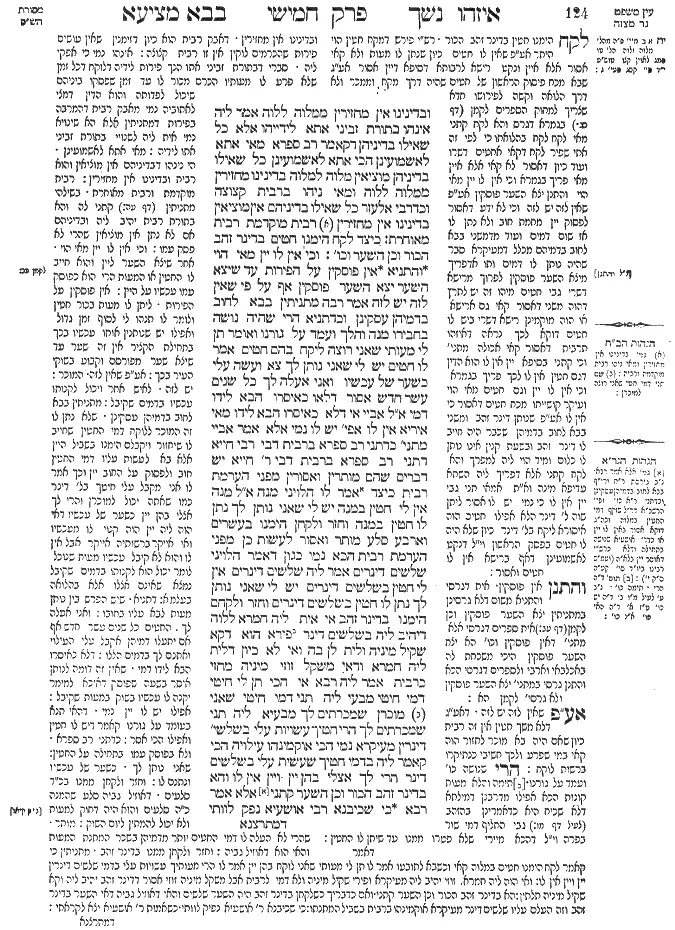
ובדינינו אין מחזירין ממלוה ללוה אמר ליה אינהו בתורת זביני אתא לידייהו אלא כל שאילו בדיניהן דקאמר רב ספרא מאי אתא לאשמועינן הכי אתא לאשמועינן כל שאילו בדיניהן מוציאין מלוה למלוה בדינינו מחזירין ממלוה ללוה ומאי ניהו ברבית קצוצה וכדרבי אלעזר כל שאילו בדיניהם אין מוציאין בדינינו אין מחזירין רבית מוקדמת רבית מאוחרת:
כיצד לקח הימנו חטים בדינר זהב הכור וכן השער וכו':
וכי אין לו יין מאי הוי והתניא אין פוסקין על הפירות עד שיצא השער יצא השער פוסקין אף על פי שאין לזה יש לזה אמר רבה מתניתין בבא לחוב בדמיהן עסקינן וכדתניא הרי שהיה נושה בחבירו מנה והלך ועמד על גורנו ואומר תן לי מעותי שאני רוצה ליקח בהם חטים אמר לו חטים יש לי שאני נותן לך צא ועשה עלי כשער של עכשיו ואני אעלה לך כל שנים עשר חדש אסור דלאו כאיסרו הבא לידו דמי א"ל אביי אי דלא כאיסרו הבא לידו מאי איריא אין לו אפי' יש לו נמי אלא אמר אביי מתני' כדתני רב ספרא ברבית דבי רבי חייא דתני רב ספרא ברבית דבי ר' חייא יש דברים שהם מותרין ואסורין מפני הערמת רבית כיצד אמר לו הלויני מנה א"ל מנה אין לי חטין במנה יש לי שאני נותן לך נתן לו חטין במנה וחזר ולקחן הימנו בעשרים וארבע סלע מותר ואסור לעשות כן מפני הערמת רבית הכא נמי כגון דאמר הלויני שלשים דינרים אמר ליה שלשים דינרים אין לי חטין בשלשים דינרים יש לי שאני נותן לך נתן לו חטין בשלשים דינרים וחזר ולקחם הימנו בדינר זהב אי אית ליה חמרא ללוה דיהיב ליה בשלשים דינר פירא הוא דקא שקיל מיניה ולית לן בה ואי לא כיון דלית ליה חמרא ודאי משקל זוזי מיניה מחזי כרבית אמר ליה רבא אי הכי תן לי חיטי דמי חיטי מבעי ליה תני דמי חיטי שאני מוכרן שמכרתים לך מבעיא ליה תני שמכרתים לך הרי חטיך עשויות עלי בשלשי' דינרין מעיקרא נמי הכי אוקמינהו עילויה הכי קאמר ליה בדמי חטיך שעשית עלי בשלשים דינר הרי לך אצלי בהן יין ויין אין לו והא בדינר זהב הכור וכן השער קתני אלא אמר רבא כי שכיבנא רבי אושעיא נפק לוותי
Comments from Rashi on Masechet Bava Metzia Page 62b
ובדינינו אין מחזירין . דאבק רבית הוא כיון דזימנין שאין עושים פירות שהכרמים לוקין אין זו רבית קצוצה: אינהו נמי כי אפקי ליה . סברי דבתורת זביני אתו הנך פירות לידיה דלוקח דכל זמן שלא פרע לו מעותיו הכרם מכור לו עד זמן שפסקו ביניהם שיכול לפדותה והוא הדין דמצי לאתוביה נמי מאבק רבית דהמרבה בפירות דמתניתין אלא הא שינויא נמי אית ליה לשנויי בתורת זביני אתו לידיה: מאי אתא לאשמועינן . הי נינהו דבדיניהם אין מוציאין והוא רבית ובדינינו אין מחזירין: רבית מוקדמת ורבית מאוחרת . בשלהי מתניתין (דף עה:) קתני לה והא בתורת רבית יהיב ליה ובדיניהם אם לא נתן אין מוציאין שהרי לא פסק עמו: וכי אין לו יין מאי הוי . אחר שיצא השער ליין והוא חייב לו החטין או המעות הרי הוא כפוסק עמו עכשיו על היין: אין פוסקין על הפירות . ליתן לו מעות בכור חטין ולומר לו תנהו לי לסוף זמן גדול ואפילו יש שנותנין אותו עכשיו בכך בתחילת הקציר אין זה שער עד שיצא שער מפורסם וקבוע בשוקי העיר בכך: אע"פ שאין לזה . המוכר: יש לזה . לאיש אחר ויכול לקנותו עכשיו בדמים שקיבל: מתניתין בבא לחוב בדמיהן עסקינן . שלא נתן לו זה המוכר ללוקח דמי החטין שחייב לו שיחזור ויקבלם הימנו בשביל היין אלא בא לעשות עליו דמי החטין חוב ולפסוק על החוב יין וכך אמר לו אני מקבל עלי חיטך בל' דינר כמו שאתה יכול למוכרן והרי לך אצלי בהן יין כשער של עכשיו דאי הוה ליה יין הוה קנוי לו מעכשיו ואי אייקר ברשותיה אייקר אבל אין לו והוא לא קיבל עכשיו מעות שנוכל לומר יכול הוא לקנותו בדמים שקיבל נמצא שאינם אצלו אלא בהלואה בעלמא: דתניא . שיש הפרש בין נותן מעות לבא עליו בחובו: ואני אעלה לך . החטים כל שנים עשר חדש אף אם יתעלו דמיהן אקבל עלי העילוי ואתנם לך בדמים הללו: דלא כאיסרו הבא לידו דמי . שאין זה דומה לנותן איסר בשעה שפוסק דאיכא למימר יקנה לו עכשיו בשוק במעות שקיבל: אפילו יש לו יין נמי . דהאי תנא בעומד על גורנו קאמר דיש לו חטין ואפילו הכי אסר: כדתני רב ספרא . ולא בפוסק עמו בתחילה על החטין: שאני נותן לך . כשער של עכשיו ונתנם לו: וחזר ולקחן ממנו בכ"ד סלעים . דאוזיל גביה סלע שהמנה כ"ה סלעים והוא היה דחוק למעות ולא יכול להמתין ליום השוק: מותר . שהרי לא העלה לו דמי החטים יותר מדמיהן בשכר המתנת המעות והאי הוא דאוזיל גביה: וחזר ולקחן ממנו בדינר זהב . מתניתין כי קאמר לקח הימנו חטים במלוה קאי וכבא לתובעו אמר לו תן לי מעותי שאני לוקח בהן יין אמר לו הרי מעותיך עשויות עלי בדמי שלשים דינרין יין ויין אין לו: ואי הוה ליה חמרא . זוזי יהיב ליה מעיקרא ופירי שקיל מיניה ולא דמי לרבית אבל משקל מיניה זוזי אסור דדינר זהב יהיב ליה וקא שקיל מיניה תלתין: הא בדינר זהב הכור וכן השער קתני . ואם כדבריך כשלקחן בדינר זהב היה השער שלשים והאי דאוזיל גביה דאי השער בדינר זהב וזה העלם עליו שלשים דינר מעיקרא אוקמינהו ברבית בשביל המתנתו: כי שכיבנא ר' אושעיא נפיק לוותי . כשאמות ר' אושעיא יצא לקראתי:
Comments from Tosafot - Bava Metzia 62b
לקח הימנו חטין בדינר זהב הכור . רש"י פירש דמקח חטין הוי היתר אע"פ שאין לו חטים כיון שנתן לו מעות ולא קאי אסור אלא איין ונקט רישא לרבותא דסיפא דיין אסור אע"ג שבא מכח פיסוק הראשון של חטים שהיה דרך מקח וממכר ולא דרך הלואה וקשה לפירושו חדא שצריך למחוק הספרים לקמן (בבא מציעא דף סג.) בגמרא דגרס והא לקח קתני מאי לקח לקח בהלואתו כי לפי זה אתי שפיר לקח דקאי אחטים דשרו ועוד כיון דאסור לא קאי אלא איין מאי פריך בגמרא וכי אין לו יין מאי הוי והתנן יצא השער פוסקין אע"פ שאין לזה יש לזה וכי לא ידע דאסור לפסוק יין מחמת חוב ולא נתן לו אז שום דמים ועוד מדמשני בבא לחוב בדמיהם מכלל דמעיקרא סבר שהיה נותן לו דמים ותו אדפריך מיצא השער פוסקין לפרוך מרישא דשרי גבי חטים מיהו זה יש לתרץ דהוה משני דאסור קאי גם ארישא או הוה מוקמינן רישא דשרי ביש לו חטים דוקא לכך נראה דאיזהו תרבית דאסור קאי אכולה מתני' וכי קתני בסיפא יין אין לו הוא הדין דגם חטין אין לו לכך פריך בגמרא וכי אין לו יין וגם חטים מאי הוי ועיקר קושייתו מכח חטים דאסור כי אין לו אע"פ שנותן דינר זהב ומשני בבא לחוב בדמיהן שכבר היה חייב לו דינר זהב ובשעת קנין אינו נותן לו כלום ומיד הוי ליה למפרך והא לקח קתני אלא דפריך ליה השתא עדיפא מינה וא"ת אמאי תני גבי יין אין לו כי נמי יש לו אסור ליתן שוה ל' דינר הלא אפילו חטים הוה איסורא ליקח בל' דינר כיון שלא היה לו חטים בפסק הראשון וי"ל דנקט לאשמועינן דאף ברישא אין לו חטים ואסור: והתנן אין פוסקין . אית דגרסי והתניא משום דלא גרסינן במתניתין יצא השער פוסקין וכן לקמן (בבא מציעא דף עב:) אית ספרים דגרסי אלא מתני' דאין פוסקין וכו' הא יצא השער פוסקין היכי משכחת לה באכלבאי וארבי ולספרים דגרסי הכא והתנן גרסי במתני' יצא השער פוסקין ולא גרסי' לקמן הא: אע"פ שאין לזה יש לזה . דאע"ג דלא משך חטין אין זה רבית כיון שאם היה בא מוכר לחזור הוה קאי במי שפרע ולכך חשיבי כנתיקרו ברשות לוקח: הרי שנושה כו' ועמד על גורנו . תימה והלא מעות קונות הכא אפילו מדרבנן דמילתא דלא שכיח היא כדאמרינן בהזהב (לעיל בבא מציעא דף מו:) גבי החליף דמי שור בפרה וי"ל דהכא מיירי שלא פטרו ממנו עד שיתן לו החטין:
Bava Metzia 62b - Mishnah translated into english
And yet, by our laws one does not return the interest from the lender to the borrower. Since the interest was not fixed from the outset, and there is also no certainty that he will consume any produce, this is merely a case of a hint of interest. Rav Ashi said to him: The gentiles do not consider that transaction a loan; rather, they see this as a case where the field came into his possession by means of a transaction in the form of a sale. The field was temporarily sold to the lender, who sells it back to the borrower when the debt is paid.
The Gemara asks: But if one is a case of deposit and the other is a case of sale, the principle that begins with: Any case where by their laws, that Rav Safra is saying, what is he coming to teach us? The Gemara answers that this is what he is coming to teach us: In any case where by their laws one removes the interest from the possession of the borrower to give to the lender, by our laws one returns the interest from the lender to the borrower. And what is that case? It is a case of fixed interest, and it is in accordance with the opinion of Rabbi Elazar.
And as for the statement that in any case where by their laws one does not remove the interest from the possession of the borrower to give to the lender, by our laws one does not return the interest from the lender to the borrower, this is referring to a case of prior interest, i.e., interest paid prior to the granting of a loan in order to induce the lender to grant the loan, and subsequent interest, i.e., a gift given after a loan has been repaid to show thanks to the lender for lending the money. Although paying these types of interest is prohibited, as they are not actually part of the agreement, by our laws one does not compel the lender to return those payments.
§ The mishna teaches: How so? For example, one acquired wheat from another at the price of one kor of wheat for one gold dinar, worth twenty-five silver dinars, with the wheat to be supplied at a later date, and such was the market price of wheat at the time he acquired it. The price of a kor of wheat then increased and stood at thirty dinars. At that point, the buyer said to the seller: Give me all of my wheat now, as I wish to sell it and purchase wine with it. The seller said to him: Each kor of your wheat is considered by me to be worth thirty dinars, and you have the right to collect its value in wine from me. And in this case, the seller does not have wine in his possession. The seller is considered to be a borrower with regard to the lender, who is viewed as lending the wheat to the seller. The Gemara asks: And if he does not have any wine, what of it? Why is this factor relevant?
But isn’t it taught in a baraita: When purchasing produce to be collected by the buyer at a later stage, one may not set a price for produce until the market rate is publicized. If the rate has been publicized, one may set a price, despite the fact that the seller is not actually in possession of any such produce, as even though this seller does not have any of that produce, that one, i.e., another seller, does have some of that produce, which the first seller could purchase at the market rate. Evidently, once the market rate is publicized, the transaction is considered a purchase and not a loan with interest, even if the buyer does not receive the produce immediately.
Rabba said: In the mishna, we are dealing with one who comes to incur a debt for their value, i.e., for the value of the wine. If the borrower, i.e., the seller, possessed wine at that time he would have transferred it to the lender, i.e., the buyer, in place of the wheat, and this could have constituted a proper sale. Since he did not possess any wine, he promised it to the seller at a later date for a higher price, and this constituted a loan with interest as opposed to a sale.
And this is as it is taught in a baraita: If a person was owed one hundred dinars by another, and he went and stood by the other’s granary and said to him: Give me my money, as I wish to buy wheat with it. And the debtor said to him: I have wheat in my granary that I will give you; go and calculate for me the amount of wheat to which you are entitled by the current market rate, and I will give you this amount of wheat over the span of a full twelve months, even if the price rises in the interim. Such a practice is forbidden because of interest, as this is not similar to a case where his issar has come into his possession. Since the lender did not give the borrower even a single issar as payment for the wheat, this is not a sale, but a loan with interest.
Abaye said to Rabba: If this transaction is forbidden because it is not similar to a case where his issar has come into his possession, why does the mishna specifically teach the case where he does not have wine? Even if he does have wine, it would also be forbidden, as he gave no money at the time of the acquisition. Rather, Abaye rejected Rabba’s explanation and said: The mishna should be understood like the baraita taught by Rav Safra with regard to the halakhot of interest, which was taught originally in the school of Rabbi Ḥiyya.
As Rav Safra taught a baraita from the school of Rabbi Ḥiyya with regard to interest: There are matters that are intrinsically permitted by Torah law, but are prohibited because they are artifices used to circumvent transgressing the prohibition of interest. How so? If one said to another: Lend me one hundred dinars, and the other said to him: I do not have one hundred dinars but I have wheat worth one hundred dinars that I will give you, and he gave him wheat worth one hundred dinars, and later he went and acquired the wheat back from him for twenty-four sela, the equivalent of ninety-six dinars, this is permitted by Torah law, as it is considered a double transaction since it included first a loan of the equivalent of one hundred dinars, and then the purchase of the wheat at a discounted rate. But it is prohibited to do so by rabbinic law because this is an artifice allowing the circumvention of transgressing the prohibition of interest.
Here too, the mishna is referring to a case where he said to him: Lend me thirty dinars, and the other said to him: I do not have thirty dinars, but I have wheat worth thirty dinars that I will give you. He then gave him wheat worth thirty dinars, and he subsequently went and acquired the wheat back from him for a gold dinar, which is worth twenty-five dinars. In this case, if the borrower has wine that he gives him in place of the thirty dinars, it is produce that the lender takes from him, and therefore we have no problem with it. And if not, since he does not have wine, certainly the taking of money from him has at least the appearance of interest.
Rava said to Abaye: If so, your explanation does not accord with the wording of the mishna, as the mishna states: Give me my wheat, while according to your interpretation it should have said: Give me the value of my wheat. Abaye responds: Emend the text and teach: The value of my wheat. Rava further asked: The phrase: As I wish to sell it, is also imprecise, as it should have said: Which I sold to you. Abaye again suggests: Emend the text and teach: Which I sold to you. Rava raises yet another difficulty concerning the language of the mishna. The tanna states: Your wheat is considered by me to be worth thirty dinars, but while according to your interpretation he had also established the price for him at this amount at the outset. Abaye answers: This is what he is saying to him: The wine should be collected according to the value of your wheat that you calculated for me at thirty dinars.
Rava continued to question the wording of the mishna. It states: And you have the right to collect its value in wine from me, and he does not have wine in his possession. But the tanna taught: At the price of one kor of wheat for one gold dinar, and indeed that is the market price of wheat at the time. Both of these clauses do not accord with Abaye’s explanation. Rather, Rava said another explanation. He prefaced it by commenting: When I die, Rabbi Oshaya will come out from the Garden of Eden to greet me,
Traduction : The William Davidson digital edition of the Koren Noé Talmud, with commentary by Rabbi Adin Even-Israel Steinsaltz.