 Talmud Bavli
The learning on the whole site is dedicated : L'ilui Nishmat אסתר בת חיים
The learning on the whole site is dedicated : L'ilui Nishmat Jacques Isaac Ben Amram Loubaton
The learning on the whole site is dedicated : L'ilui Nishmat Amram ben Itshak Loubaton
Ta'anit 12b : Youtube
Daf TubeYoutube
4 video classes :
Ta'anit Page 12b
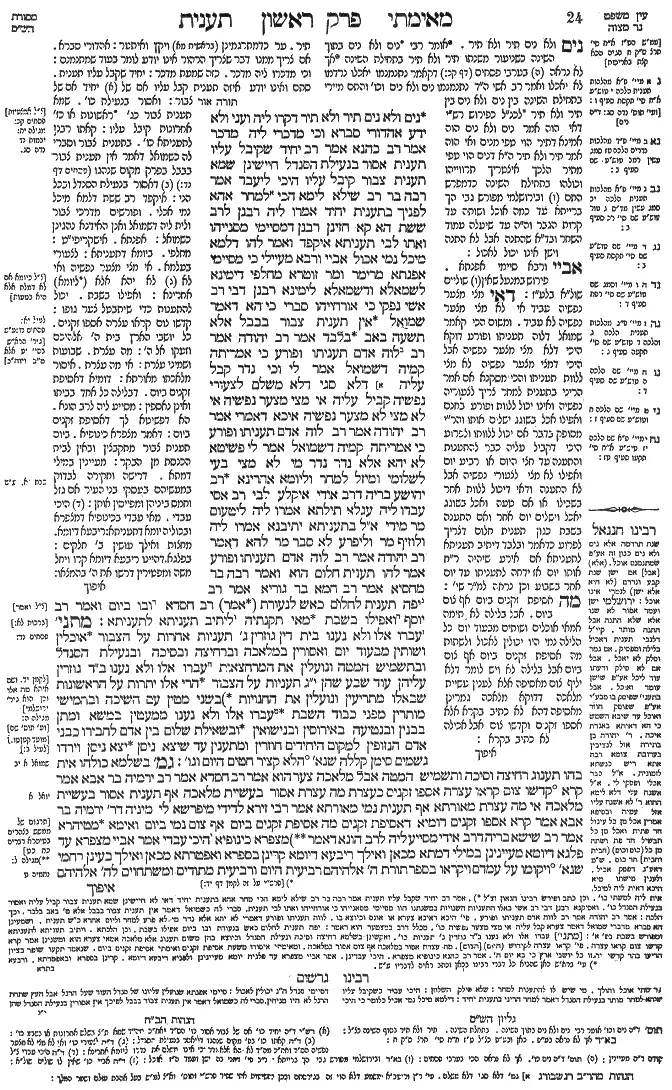
Ta'anit 12b - Guemara
נים ולא נים תיר ולא תיר דקרו ליה ועני ולא ידע אהדורי סברא וכי מדכרי ליה מדכר אמר רב כהנא אמר רב יחיד שקיבל עליו תענית אסור בנעילת הסנדל חיישינן שמא תענית צבור קיבל עליו היכי ליעבד אמר רבה בר רב שילא לימא הכי למחר אהא לפניך בתענית יחיד אמרו ליה רבנן לרב ששת הא קא חזינן רבנן דמסיימי מסנייהו ואתו לבי תעניתא איקפד ואמר להו דלמא מיכל נמי אכול אביי ורבא מעיילי כי מסיימי אפנתא מרימר ומר זוטרא מחלפי דימינא לשמאלא ודשמאלא לימינא רבנן דבי רב אשי נפקי כי אורחייהו סברי כי הא דאמר שמואל אין תענית צבור בבבל אלא תשעה באב בלבד אמר רב יהודה אמר רב לוה אדם תעניתו ופורע כי אמריתה קמיה דשמואל אמר לי וכי נדר קבל עליה דלא סגי דלא משלם לצעורי נפשיה קביל עליה אי מצי מצער נפשיה אי לא מצי לא מצער נפשיה איכא דאמרי אמר רב יהודה אמר רב לוה אדם תעניתו ופורע כי אמריתה קמיה דשמואל אמר לי פשיטא לא יהא אלא נדר נדר מי לא מצי בעי לשלומי ומיזל למחר וליומא אחרינא רב יהושע בריה דרב אידי איקלע לבי רב אסי עבדו ליה עגלא תילתא אמרו ליה ליטעום מר מידי א"ל בתעניתא יתיבנא אמרו ליה ולוזיף מר וליפרע לא סבר מר להא דאמר רב יהודה אמר רב לוה אדם תעניתו ופורע אמר להו תענית חלום הוא ואמר רבה בר מחסיא אמר רב חמא בר גוריא אמר רב יפה תענית לחלום כאש לנעורת (אמר) רב חסדא ובו ביום ואמר רב יוסף ואפילו בשבת מאי תקנתיה ליתיב תעניתא לתעניתא:
מתני׳ עברו אלו ולא נענו בית דין גוזרין ג' תעניות אחרות על הצבור אוכלין ושותין מבעוד יום ואסורין במלאכה וברחיצה ובסיכה ובנעילת הסנדל ובתשמיש המטה ונועלין את המרחצאות עברו אלו ולא נענו ב"ד גוזרין עליהן עוד שבע שהן י"ג תעניות על הצבור הרי אלו יתרות על הראשונות שבאלו מתריעין ונועלין את החנויות בשני מטין עם חשיכה ובחמישי מותרין מפני כבוד השבת עברו אלו ולא נענו ממעטין במשא ומתן בבנין ובנטיעה באירוסין ובנישואין ובשאילת שלום בין אדם לחבירו כבני אדם הנזופין למקום היחידים חוזרין ומתענין עד שיצא ניסן יצא ניסן וירדו גשמים סימן קללה שנא' (שמואל א יב, יז) הלא קציר חטים היום וגו':
גמ׳ בשלמא כולהו אית בהו תענוג רחיצה וסיכה ותשמיש המטה אבל מלאכה צער הוא אמר רב חסדא אמר רב ירמיה בר אבא אמר קרא (יואל א, יד) קדשו צום קראו עצרה אספו זקנים כעצרת מה עצרת אסור בעשיית מלאכה אף תענית אסור בעשיית מלאכה אי מה עצרת מאורתא אף תענית נמי מאורתא אמר רבי זירא לדידי מיפרשא לי מיניה דר' ירמיה בר אבא אמר קרא אספו זקנים דומיא דאסיפת זקנים מה אסיפת זקנים ביום אף צום נמי ביום ואימא מטיהרא אמר רב שישא בריה דרב אידי מסייע ליה לרב הונא דאמר מצפרא כינופיא היכי עבדי אמר אביי מצפרא עד פלגא דיומא מעיינינן במילי דמתא מכאן ואילך ריבעא דיומא קרינן בספרא ואפטרתא מכאן ואילך בעינן רחמי שנא' (נחמיה ט, ג) ויקומו על עמדם ויקראו בספר תורת ה' אלהיהם רביעית היום ורביעית מתודים ומשתחוים לה' אלהיהם
Comments from Rashi on Masechet Ta'anit Page 12b
תיר . ער כדמתרגמינן (בראשית מא) ויקץ ואיתער: אהדורי סברא . אם צריך ממנו דבר שצריך הרהור אינו יודע לומר בעוד שמתנמנם: וכי מדכרו ליה מדכר . כזה שמעת מדכר: יחיד שקבל עליו תענית . סתם ואינו יודע איזה תענית קבל עליו אם של יחיד אם של צבור: ואסור בנעילת כו' . שמא תענית צבור כשלש ראשונות או כז' אחרונות קיבל עליו: קאתו רבנן לתעניתא כו' . בתענית צבור וסברי לה כשמואל דאמר אין תענית צבור בבבל בפרק מקום שנהגו (פסחים דף נד:) דאסור בנעילת הסנדל ובכל הני: איקפד רב ששת דלמא מיכל נמי אכלי . ופורשים מדרכי צבור ולית ליה דשמואל ואנן האידנא נהגינן כשמואל: אפנתא . אישקריפי"ט: מחלפי . ביומא דתעניתא: לצעורי נפשייהו . עם הצבור אבל אינו תענית לא להתפלל תפלת עננו ולא לקובעו עליו חובה כלל וכל שעה שהוא רוצה לאכול אוכל: ואפילו בשבת . יכול להתענות כדי שיתבטל צער גופו: בשני מטין עם חשיכה . ולא נועלין ולא פותחין הואיל ולאו לכבוד שבת הוה ובחמישי מותרין לפתוח לגמרי: קדשו צום קראו עצרה אספו זקנים . כל יושבי הארץ בית ה' אלהיכם וזעקו אל ה': מה עצרת . שבועות ושמיני עצרת: אי מה עצרת . איסור מלאכתו מאורתא: דומיא דאסיפת זקנים ביום . דבלילה כל אחד בביתו ואינן נאספין: מסייע ליה לרב הונא . הא דפשיטא לך דאסיפת זקנים ביום: דאמר מצפרא כינופיא . ביום תענית צבור מתקבצין ובאין לבית הכנסת מן הבקר: היכי עבדי . מאי עבדי בכינופיא דמצפרא ובכוליה יומא דתעניתא: מעיינין במילי דמתא . דרישה וחקירה לבדוק במעשיהם בעסקי בני העיר אם גזל וחמס ביניהן ומפייסין אותן: ריבעא דיומא . מחצות ואילך עושין ב' חלקים: בפלגא . דהיינו ריבעא דיומא קרו ויחל משה ומפטירין דרשו את ה' בהמצאו:
Comments from Tosafot - Ta'anit 12b
נים ולא נים תיר ולא תיר. אומר רבי נים ולא נים בתוך השינה כשניעור משנתו תיר ולא תיר בתחילת השינה אך לא נראה בערבי פסחים (דף קכ:) דקאמר נתנמנמו יאכלו נרדמו לא יאכלו ואמר רב אשי ה"ד נתנמנמו נים ולא נים וכו' והתם מיירי בתחילת השינה בין נים ולא נים בין תיר ולא תיר לכנ"ל כפירוש רש"י דאי הוה אמר נים ולא נים הוה אמינא דתיר הוי טפי מנים ואי הוה אמר תיר ולא תיר ה"א דנים הוי טפי מתיר הלכך איצטריך תרווייהו וכולהו בתחילת השינה כדמפרש התם ובירושלמי מפורש גבי הך ברייתא עד כמה אוכל ושותה עד קרות הגבר וה"ה עד שיעלה עמוד השחר ובד"א שהתנה אבל לא התנה וישן אינו יכול לאכול: אביי ורבא סיימי אפנתא. פירוש במנעל שאין שוליים שול"א בלע"ז: דאי מצי מצער נפשיה עביד אי לא מצי מצער נפשיה לא עביד. ומשום הכי קאמר שמואל דלוה תעניתו ופורע דוקא היכי דלא מצי מצער נפשיה אבל היכי דמצי מצער נפשיה לא מצי ללוות תעניתו והכי מסקנא אם אמר הריני בתענית למחר צריך לצעוריה נפשיה ואינו יכול ללוות ופורע בחנם ואפילו אכל בשוגג ישלים אותו והר"י מסופק בדבר אם יכול ללוותו ולפרוע היכי דקביל עליה כבר להתענות והתענה עד חצי היום או רביע יום ואפילו לא מצי לצעורי נפשיה אבל לא התענה ודאי דיכול ללוות אחר בשבילו או אם טעה ואכל בשוגג יאכל וישלים יום אחר ואם התענה בשבת כגון תענית חלום דצריך לפרוע כדאמר ובלבד דיתיב תעניתא לתעניתא אם אירע שיהיה ר"ח אותו יום אז ידחה לתעניתו עד יום אחר בשבוע וכן נראה למ"ר שי': מה אסיפת זקנים ביום אף צום ביום. אבל בלילה לא תימה אמאי אוכלים ושותים מבעוד יום כל הלילה נמי היו יכולין לאכול ולשתות מה אסיפת זקנים ביום אף צום ביום אבל בלילה לא ויש לומר דלא יליף צום מאסיפה אלא לענין עשיית מלאכה דדוקא מלאכה גמרינן מאסיפה דהא לא כתיב בקרא אלא אספו זקנים וקדשו צום אבל אכילה לא כתיב בקרא:
Ta'anit 12b - Mishnah translated into english
One is asleep but not fully asleep, awake but not fully awake. This means that if they call him he will answer, but he cannot give a coherent reason. And when we remind him of something that just happened he remembers it.
Rav Kahana said that Rav said: An individual who took a fast upon himself is prohibited to engage in the wearing of shoes on the day of his fast. The reason is that we are concerned that perhaps he took a communal fast upon himself, and wearing shoes is prohibited on communal fast days. The Gemara asks: How should one act, to avoid this problem? Rabba bar Rav Sheila said: Let him recite this formula: Tomorrow I shall be before You in the observance of an individual fast.
The Gemara relates: The Sages said to Rav Sheshet, who was blind: We see Sages who wear their shoes and go to the study house on a communal fast day. This shows that there is no need to be concerned about this prohibition. Rav Sheshet became angry and said to them: Perhaps they even ate, if you saw them treating the fast lightly.
The Gemara further relates: Abaye and Rava would enter the synagogue while wearing sandals on the leather [apanta] of their shoes, i.e., they would wear their shoes upside down. Mareimar and Mar Zutra would switch the right shoe for the left and the left for the right. By contrast, the Sages of the school of Rav Ashi would go out wearing shoes in their usual manner. They hold in accordance with that which Shmuel said: The only completely stringent communal fast in Babylonia is the Ninth of Av alone. Therefore, in Babylonia there is no need to be concerned that one might have taken a communal fast upon himself.
The Gemara discusses another topic related to fasts. Rav Yehuda said that Rav said: A person may borrow his fast and repay, i.e., if one is unable to fast on the specific day he intended to fast, he may annul his fast for that day and fast on another day instead. Rav Yehuda related: When I said this halakha before Shmuel, he said to me: And did he take a vow upon himself, which would mean that it is not possible for him not to repay it? He took upon himself to cause himself discomfort on that day. If he is able, he must cause himself discomfort; if he is unable, he does not need to cause himself discomfort, in which case he need not repay the fast.
Some say a different version of this discussion. Rav Yehuda said that Rav said: One may borrow his fast and repay. When I said this halakha before Shmuel, he said to me: This is obvious. Let it be considered only a vow; even so, is he not required to repay a vow on the next day or on another day? Since a commitment to fast is a type of vow, he is obligated to repay it at some point in time.
The Gemara relates: Rav Yehoshua, son of Rav Idi, happened to visit the house of Rav Asi. They prepared a third-born calf, whose meat is high quality, for him. They said to him: Let the Master taste something. He said to them: I am sitting in the observance of a fast and may not eat. They said to him: And let the Master borrow and repay the fast. Doesn’t the Master hold in accordance with this halakha that Rav Yehuda said that Rav said: A person may borrow his fast and repay? Rav Yehoshua, son of Rav Idi, said to them: It is a fast for a dream. He was fasting to rectify the negative effects of a bad dream he had experienced the night before.
The Gemara explains the relevance of this last comment. And Rabba bar Meḥasseya said that Rav Ḥama bar Gurya said that Rav said: A fast is effective to neutralize a bad dream like fire is effective for burning chaff. Rav Ḥisda said: The fast is effective specifically on that day that one dreamed. And Rav Yosef said: And one suffering from a bad dream is permitted to fast even on Shabbat. The Gemara asks: What is the remedy for one who has denigrated Shabbat by fasting? Let him sit in observance of another fast, on another day, to atone for his fast on Shabbat.
MISHNA: If these three regular fasts have passed and they have not been answered with rain, the court decrees three other fasts upon the community. These are severe fasts, in which one may eat and drink only while it is still day, before the beginning of the night of the fast, and on the day of the fast itself they are prohibited to engage in the performance of work, in bathing, in smearing with oil, in wearing shoes, and in marital relations; and they lock the bathhouses so that no one should come to bathe on that day.
If these three fasts have passed and they still have not been answered, the court decrees on them another seven fasts, which are a total of thirteen fasts, upon the community, not including the first three fasts observed by individuals. These seven fast days are more severe than the first ones, as on these days, in addition to all the earlier stringencies, they sound the alarm, as will be explained in the Gemara, and they lock the stores. Although shops must remained closed most of the time on these days, on Monday they open them a little at nightfall to allow people to purchase food for breaking their fast, and on Thursday they are permitted to open the stores all day in deference to Shabbat, so that people may purchase food for the sacred day.
If these fasts have passed and they have not been answered the court does not decree additional fasts, but the entire community observes the customs of mourning. They decrease their engagement in business transactions, in building and planting, in betrothals and marriages, and in greetings between each person and his fellow, like people who have been rebuked by God. The individuals, i.e., Torah scholars, resume fasting every Monday and Thursday until the month of Nisan ends. After this date they no longer pray for rain, since if Nisan has ended and rains subsequently fall, they are a sign of a curse, as it is stated: “Is not the wheat harvest today? I will call to the Lord that He may send thunder and rain, and you will know and see that your wickedness is great” (I Samuel 12:17). The wheat harvest is around the time of Shavuot, well after Nisan.
GEMARA: The Gemara discusses the activities that are prohibited on a communal fast day: Granted, all of the other actions are prohibited, as they provide pleasure, namely, bathing, smearing, and marital relations. However, working is a cause of suffering. Why was it decreed that one must refrain from working? Rav Ḥisda said that Rav Yirmeya bar Abba said as that the verse states: “Sanctify a fast, call a solemn assembly, gather the elders” (Joel 1:14), this indicates that a fast day is like a day of assembly. Just as on a day of assembly, i.e., a Festival, it is prohibited to engage in working, so too, on a fast it is prohibited to engage in working.
The Gemara asks: If so, one could say: Just as on a day of assembly it is prohibited to work from the previous evening, so too, on a fast it should be prohibited to work from the evening. Rabbi Zeira said: This was explained to me by Rabbi Yirmeya bar Abba himself: The verse states: “Sanctify a fast, call a solemn assembly, gather the elders,” indicating that a fast is similar to a gathering of elders: Just as the gathering of elders is performed by day, so too, the time for a fast is also by day. The Gemara asks: But if so, one can say that the fast should begin from noon. Rav Sheisha, son of Rav Idi, said: This supports the opinion of Rav Huna, who said: The public gathering on fast days occurs in the hours of the morning.
The Gemara asks: How do they act on a fast day? Abaye said: From the morning until the middle of the day they examine the affairs of the town by checking if there are any deficiencies or corruptions in the city, moral or otherwise, and attempt to fix them, as these problems may have been the cause of the Divine punishment. From this point forward, for a quarter of the day they read a portion from the Torah and a portion from the Prophets [haftara]. From this point forward, they pray and petition for mercy, as it is stated: “And they stood up in their place and they read in the book of the Torah of the Lord their God a fourth part of the day; and another fourth part they confessed, and prostrated themselves before the Lord their God” (Nehemiah 9:3).
Traduction : The William Davidson digital edition of the Koren Noé Talmud, with commentary by Rabbi Adin Even-Israel Steinsaltz.